
Why Your Boss Behaves Badly (And Why Employees Often Get It Wrong, Too)

The Leadership Blind Spot That Keeps Organizations Stuck
One of the fastest ways to create division inside an organization is to decide you’ve already figured out who the problem is. Employees often believe the boss is the problem. Leaders often believe it’s the employees. Departments blame other departments. Executives blame resistance. Teams blame leadership.
Everyone becomes convinced that someone else is responsible for the dysfunction.
While there are certainly situations involving genuinely abusive or unethical leadership, most workplace conflict doesn’t begin with malicious intent. It begins with perception. And perception is heavily influenced by what happens to the human brain under pressure.
The Boss Behaving Badly
We’ve become increasingly quick to label difficult leaders.
“They’re narcissistic.”
“They only care about themselves.”
“They’re controlling.”
“They’re impossible.”
Occasionally, those labels are accurate. But far more often, what employees are experiencing isn’t clinical narcissism. It’s a leader demonstrating narcissistic behaviors. That distinction matters. Because behavior can change. Labels rarely do.
At KeenAlignment, we often see executives who genuinely want to lead well but whose nervous systems have become trapped in chronic survival mode. When leaders experience sustained pressure, uncertainty, or fear, they often drop below what we call the Power and Freedom Line.
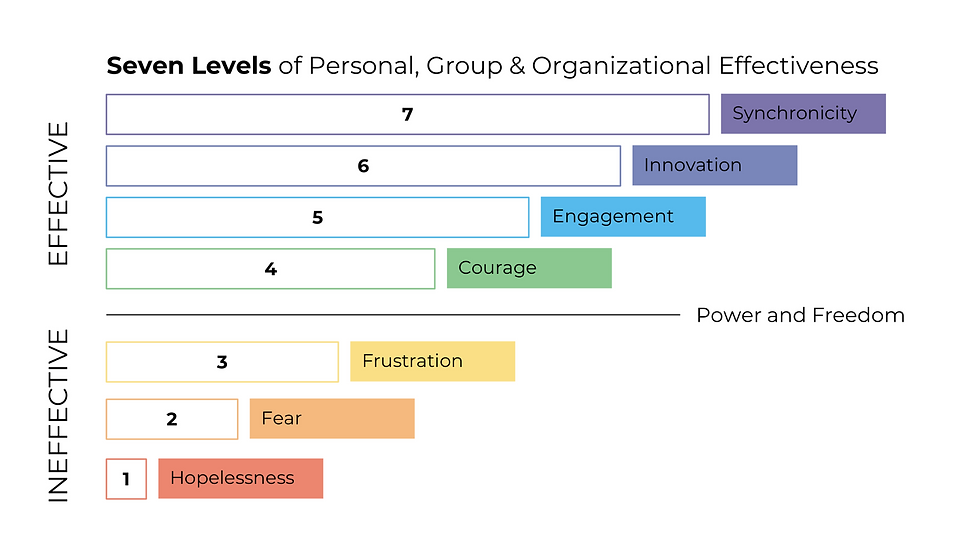
This isn’t simply an emotional state. It’s a neurological one. As stress increases, the brain shifts resources away from higher-order thinking. Curiosity declines. Perspective narrows. Self-protection increases.
The leader begins asking questions like:
How does this affect me?
What if I’m wrong?
How do I protect my reputation?
How do I maintain control?
From the employee’s perspective, this can look like:
Micromanagement
Defensiveness
Dismissing ideas
Talking instead of listening
Taking credit while avoiding accountability
Becoming emotionally unavailable
Needing to always be right
It feels personal. Often, it isn’t. It’s patterned.
The Employee Story Isn’t Always Accurate Either
Here’s the part organizations rarely discuss. Employees also enter survival mode. When that happens, they create stories about leadership that feel completely true.
The boss doesn’t care. Leadership is against us. Management never listens. Nothing will ever change.
The moment these stories become fixed beliefs, confirmation bias takes over. Every interaction becomes additional evidence. Every decision is interpreted through the same lens.
Soon, employees stop bringing ideas. They stop asking questions. They stop assuming positive intent. Instead of seeking understanding, they gather proof that they were right all along.
The leader sees disengagement. The employee sees poor leadership. Both become convinced the other side is the problem. Neither recognizes they’re participating in the same psychological pattern.
The Danger of Living Inside Our Own Narrative
One of the greatest obstacles to organizational culture transformation is certainty. When we’re convinced someone else is the issue, curiosity disappears.
We stop asking:
What might I be contributing?
How is my behavior affecting this situation?
What assumptions am I making?
What am I not seeing?
Instead, we defend our position. Ironically, both leaders and employees often accuse each other of exactly the same behaviors:
“They never listen.”
“They’re defensive.”
“They always blame others.”
“They don’t take accountability.”
Each side believes they’re describing the other. Very few realize they’re also describing themselves.
Feedback Feels Like Threat When Identity Is Attached
This is one reason leadership assessments and 360-degree feedback can be so powerful. Not because they’re perfect. They’re not. People have biases. People project. People interpret behavior differently.
But patterns emerge. And patterns are incredibly valuable.
For many leaders, receiving feedback feels like an attack on their identity. Especially if they’ve built their self-worth around competence, achievement, or being the one with the answers.
Likewise, employees often dismiss leadership feedback because it feels unfair, controlling, or disconnected from reality.
Both reactions come from the same place. Protection. When identity feels threatened, the nervous system responds before logic ever has a chance.
Organizational Culture Changes When Awareness Increases
Healthy organizations aren’t built because everyone agrees. They’re built because people develop enough self-awareness to question their own assumptions before judging someone else’s intentions. The most effective leaders recognize when they’ve become controlling. The most effective employees recognize when they’ve become cynical. Both become curious instead of certain. Both learn to regulate before they react. Both seek understanding before assigning blame.
This is where real organizational culture transformation begins. Not with better policies. Not with another engagement survey. But with individuals developing the capacity to recognize their own survival patterns before those patterns begin driving the culture.
The Real Competitive Advantage
At KeenAlignment, we teach leaders and organizations how to recognize when they’ve dropped below the Power and Freedom Line and how to return to a state of awareness, curiosity, and intentional leadership. Because awareness isn’t simply a personality trait. It’s a leadership capability. And organizations don’t become healthier because one side changes. They become healthier when everyone stops asking, “Who’s the problem?” and starts asking, “What am I contributing?”
That’s the moment blame gives way to responsibility. And responsibility is where high-performing, resilient cultures are built.
Ready to Build a More Self-Aware Leadership Culture?
If your organization is experiencing recurring conflict, declining trust, disengagement, or communication breakdowns, the issue may not be a lack of talent. It may be a lack of awareness.
KeenAlignment guides leaders and teams to develop the self-awareness,
ResponseAgility™, and communication skills needed to move beyond blame and build cultures where people take ownership, collaborate effectively, and perform at their highest level.
Learn more about our organizational culture solutions at https://www.keenalignment.com/organizational-culture-transformation